
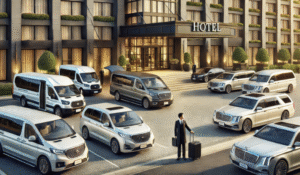
A seamless guest journey doesn’t stop at the lobby—and smart hoteliers know it. When a hotel partners with an automotive dealership’s Fixed Operations (service, parts, and collision), both sides unlock revenue, guest loyalty, and operational resilience that are hard to replicate any other way. Guests travel by car more than ever for regional leisure, business, and events; meanwhile, dealerships are hungry for creative ways to expand service volume and differentiate their brand experience beyond the showroom. Brought together, they create a locally rooted ecosystem of convenience, trust, and value that keeps travelers coming back and keeps service bays humming.
Below is a strategic blueprint for why this partnership works, how it delivers for both sides, and where to start.
A Shared Customer at the Center of the Experience
Hotel guests and automotive service customers are often the same people—time-pressed travelers, road-warriors on business, sports fans in town for a weekend, and families on longer road trips. When a hotel plugs into a nearby Fixed Ops department, the property can offer pre-arranged maintenance slots, discounted oil changes during stays, priority diagnostics, or even overnight service for guests who park and sleep. That turns vehicle upkeep from a hassle into a helpful amenity, and it keeps room nights secure because guests no longer need to interrupt their travel plans for routine service. For the dealership, the hotel becomes a steady funnel of qualified drivers who value convenience and are likely to approve recommended work when it doesn’t disrupt their trip.
Industry readers can track how hospitality’s best performers are bundling convenience and loyalty benefits across partners by following authoritative hotel-news outlets like Skift: Hotels and CoStar News: Hotels. These publications frequently spotlight the kinds of ancillary, local partnerships that move the needle on RevPAR, loyalty enrollment, and guest satisfaction. Skift+1
Revenue Stacking for Both Sides
Partnerships that solve a real guest problem tend to monetize themselves. A hotel can package “Stay + Service” offers—weekend rates paired with a discounted multi-point inspection, tire rotation, or AC check—driving both occupancy and ancillary revenue. The dealership gains predictable appointment flow on off-peak days, raises dollars per RO with well-timed convenience, and builds first-party relationships with out-of-market drivers who may return for bigger repairs later.
Hotels exploring RevPAR-plus strategies can glean case studies and executive commentary from Hospitality Net, which regularly features owner/operator insights on partnerships, F&B activations, and service bundles that enhance the total guest wallet share. Hospitality Net
Making Vehicle Care an Amenity, Not an Errand
Great hotels win with frictionless service. A dealership Fixed Ops team—when integrated thoughtfully—becomes an extension of the concierge:
-
Valet-to-Service: The guest hands keys to valet; the vehicle is shuttled to the dealership for scheduled work and returned before checkout.
-
After-Hours Drop & Overnight RO: Guests arriving late can authorize work via digital approvals; techs complete jobs by morning.
-
In-Lobby Status & Digital Payments: Service updates appear in the hotel’s app or via text; guests approve additional line items while relaxing at the bar or heading to a meeting.
-
Road-Trip Readiness: Seasonal safety checks, wiper replacements, and tire inspections packaged as “Peace-of-Mind” add-ons at booking.
This is the kind of end-to-end trip design the hotel trade press often highlights when discussing loyalty economics, mobile experience, and place-based partnerships. Outlets such as Skift regularly analyze how amenity ecosystems convert one-time guests into repeat, higher-value members. Skift
Upside for Group, Event, and Corporate Travel
Event planners love predictability. A hotel + Fixed Ops bundle can include negotiated shuttle maintenance, preferred turnaround for VIP speakers’ vehicles, or fleet checks for production crews. For corporate accounts, the property can offer tiered automotive perks—priority service windows, loaner coordination, or EV charging plus inspection—baked into the negotiated rate. It’s a win for travel managers who want to keep their teams productive, and it’s a win for dealerships who capture a steady stream of business travelers on repeat itineraries.
Trade publications frequently connect these dots between group business recovery, ancillary revenue, and local partnerships; news hubs like CoStar News — Hotels cover brand and owner strategies that de-risk group blocks and enhance total revenue per available guest. CoStar
Operational Resilience and Community Presence
Partnerships make properties and dealerships more resilient. During regional events, weather disruptions, or construction booms, a trusted local network enables fast problem-solving—loaner vehicles, rapid tire replacements, courtesy shuttles, or windshield repairs for stranded travelers. The hotel strengthens its role as a community anchor, while the dealership reinforces its customer-first reputation.
To situate this within the broader hospitality context, the Hospitality industry is fundamentally about integrated services that create comfort and continuity for guests—lodging, F&B, transport, events, and local experiences working in concert. A hotel–Fixed Ops alliance is a practical extension of that logic. Wikipedia
Brand Differentiation You Can See—and Sell
In competitive markets, small amenities can swing bookings. “Car-Care Concierge” becomes a marketable differentiator on OTAs and brand.com, highlighted in photos and copy alongside EV charging, wellness, and craft F&B. For lifestyle and boutique properties, automotive service bundles align with the story of local craft and thoughtful curation: guests aren’t just sleeping somewhere; they’re being looked after.
On the dealership side, marketing can position the service drive as the “official automotive partner” of a marquee hotel, with co-branded content, lobby signage, and seasonal offers. The halo effect is real: the hotel’s design, service ethos, and culinary credentials rub off on the dealership’s brand—and vice versa.
If you want to keep a finger on what resonates in hotel positioning and amenity storytelling, the hotel-news vertical at Skift: Hotels and the timely owner/operator coverage at Hospitality Net are invaluable reads. Skift+1
EV Momentum, Maintenance Windows, and Micro-Moments ⚡
EV adoption changes guest needs and opens new partnership canvases. Hotels with Level 2 or DC fast charging can pair charging sessions with “Quick-Check” inspections or software updates coordinated through the dealership’s service lane. For road-trippers, the dwell time while charging is ideal for small maintenance tasks; for urban business travelers, overnight charging plus a scheduled service pick-up eliminates weekday downtime.
These micro-moments—15 to 90 minutes of otherwise idle time—are conversion gold for Fixed Ops, and they elevate the perceived value of the hotel stay. Hotel-news outlets, including Daily Lodging Report by Skift, chronicle how tech and infrastructure shifts (EVs, IoT, mobile access) are redefining amenity mixes and operational partnerships. Skift
Data, Loyalty, and Measurable Lift
This partnership produces clean data loops:
-
Pre-Arrival: Offer add-on service during digital check-in to gauge demand and capture consent.
-
On-Property: Track uptake, approvals, and guest satisfaction in the PMS and CRM.
-
Post-Stay: Trigger dealership follow-ups (e.g., maintenance schedule) with the guest’s permission, while the hotel nurtures loyalty offers for return trips.
Analysts and trade media detail how loyalty ecosystems monetize these moments by aligning partners around shared KPIs—guest satisfaction, average daily rate lift via packages, and repeat intent. Skift’s market coverage explores the intersection of loyalty strategy, tech adoption, and ancillary revenue in clear, data-driven terms. Skift+1
How to Structure the Partnership Without Friction
A strong hotel–Fixed Ops program rests on four pillars:
-
Clear Guest Journey Mapping
Define points of discovery (booking engine, pre-arrival email), conversion (add-to-stay offers), and fulfillment (valet handoff, digital approvals, payment). Keep the experience native to the hotel’s brand voice and app. -
Operational SLAs and Training
Align on response times, pick-up windows, inspection checklists, and communication protocols. Train front-desk, valet, and concierge teams on scripts and exception handling so no one improvises at peak hours. -
Simple, Transparent Pricing
Package common services with tax and fees included, publish lead times, and set “no-surprise” parameters for additional work. Transparency builds trust and reduces front-desk escalations. -
Co-Marketing and Measurement
Launch with a limited-time offer to spark awareness, then establish a cadence tied to local demand drivers—holidays, concerts, sports, conventions. Measure attach rate, satisfaction, repeat bookings, and service RO growth, and review monthly.
For ongoing examples of hotel owners and operators testing ancillary plays, browse the hotels coverage on CoStar News and Skift, which frequently showcase the tactics that separate leaders from laggards. CoStar+1
Local Ecosystems Work Best
The highest-performing programs are hyper-local. Proximity reduces friction; shared geography means easier shuttles and faster turnarounds; overlapping customer bases mean better word of mouth. Hotels can start with a single, quality-focused dealership partner and expand to additional brands as demand grows—especially valuable in markets with high drive-to visitation or seasonal events. Trade sources like Hospitality Net frequently highlight city-by-city narratives where owners win by building collaborative ecosystems rather than isolated amenities. Hospitality Net
Guest Well-Being and Peace of Mind 🧰
Ultimately, hospitality is about care. A road-weary family arriving with a slow leak finds relief when the front desk can coordinate a repair while they swim and sleep. A sales rep facing a tight morning meeting appreciates waking to a serviced vehicle with a full tank and a fresh invoice paid via mobile. These quiet moments—low drama, high empathy—create the kind of memory that fuels five-star reviews and repeat stays.
Framed within the broader definition of hospitality’s service tapestry, the Wikipedia entry on the hospitality industry places hotels within a network of services that, when aligned, transform stress into comfort. A dealership Fixed Ops partner is a natural, guest-friendly extension of that network. Wikipedia
Conclusion: Two Brands, One Seamless Journey
A hotel–automotive Fixed Ops partnership is not a gimmick. It is a practical, high-impact way to reduce traveler friction, unlock incremental revenue, and deepen community roots. Hotels gain a standout amenity that supports occupancy, ADR, and loyalty. Dealerships gain predictable service volume and a reputation for customer care that extends beyond the sales floor. Most importantly, guests gain time, confidence, and a sense that someone considered the whole journey—not just the check-in.
For leaders intent on building next-gen guest experiences, now is the moment to move from ideas to integrated execution. Map the journey, set the SLAs, tell the story together—and turn car care into a signature of true hospitality. ✨