

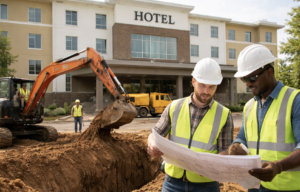
A hotel property has to do much more than look inviting from the road. It has to function well from the ground up. Guests notice the lobby, the rooms, the parking areas, the landscaping, and the ease of arrival, yet all of those experiences are shaped by what happens below the surface long before a visitor checks in. For a Georgia hotel owner, manager, investor, or developer, site conditions can affect expansion plans, drainage performance, utility access, curb appeal, safety, and long-term maintenance costs. That is one reason excavation work matters more than many people realize.
That matters even more in a state where hospitality continues to be an important economic driver. Georgia tourism officials regularly highlight new lodging activity, new attractions, and continued travel momentum through resources like the Explore Georgia Media Room, while the Georgia Hotel & Lodging Association tracks hospitality issues that matter to hotel owners across the state. On the broader industry side, even a general overview of the modern Hotel sector shows how much today’s properties depend on infrastructure, utilities, access, and guest-ready operations rather than simply a building with rooms.
Hotel Projects Begin Below the Surface
When people think about hotel improvements, they often picture remodeled guest rooms, upgraded bathrooms, better signage, or a refreshed exterior. Those improvements matter, but many hotel goals start with dirt work, grading, clearing, trenching, and site preparation. A property may need to expand parking, add storm drainage, correct uneven ground, prepare for a detached amenities building, improve service access behind the hotel, or make way for outdoor gathering areas. None of that begins with paint or décor. It begins with the site itself.
That is why a hotel owner planning a property improvement may need an Excavation Contractor Thomaston GA. The right excavation team helps create a workable foundation for what comes next. Before concrete is poured, utilities are run, or asphalt is installed, the land has to be shaped correctly. Good sitework helps a hotel project move forward with fewer surprises, better drainage, safer traffic flow, and stronger long-term performance.
Drainage Problems Can Hurt Guest Experience and Property Value
One of the most common reasons a hotel may need excavation work is drainage. A hotel can have a beautiful building and still create a poor guest impression if the parking lot floods, the sidewalks stay muddy, or water collects near entrances after a heavy rain. In Georgia, where storms and seasonal downpours can quickly expose grading problems, poor drainage can become more than an inconvenience. It can create slip hazards, damage landscaping, weaken paved areas, and increase wear around the building.
Excavation work can help correct those issues by reshaping slopes, improving runoff paths, preparing for drainage structures, and reducing the chance that water will sit where it should move. For a hotel, that kind of work is not just about appearance. It supports safety, protects the asset, and helps the property feel well-maintained. Guests may never say, “This hotel has excellent grading,” but they absolutely notice when the lot is easy to navigate and the grounds look cared for in every season.
Parking, Access, and Traffic Flow Often Require Earthwork
Hotels depend on smooth arrival and departure. Guests want simple access, visible parking, clean walkways, and easy movement around the property. Staff members need service routes that make daily operations more efficient. Vendors, maintenance teams, and delivery vehicles also need room to operate without creating confusion or safety problems.
Whenever a hotel wants to rework a parking lot, add spaces, improve turning areas, widen access points, or prepare a new section of the property for future use, excavation may become part of the job. Soil has to be moved. Grades have to be corrected. Existing ground may need to be stabilized or reshaped so the finished area performs the way it should. This is especially valuable for older hotel properties that were built for a different level of traffic than they handle now. A property that once felt adequate can start to feel cramped, inconvenient, or dated if the site no longer matches how guests and staff use it today.
Utility Work and Renovations Still Depend on Excavation
A hotel does not have to be building a brand-new wing to need excavation services. Renovations can require them too. Trenching may be needed for water lines, sewer connections, electrical runs, drainage improvements, or exterior lighting upgrades. Even when the visible goal is something polished and guest-facing, such as better lighting, improved landscaping, or added outdoor features, the unseen support systems often depend on excavation.
This matters because hotels operate as living properties. They are not static buildings. They adapt to guest expectations, code requirements, technology needs, and operational demands. A hotel that wants to add upgraded site lighting, improve irrigation control, support outdoor seating, or prepare for future improvements may need careful excavation work to make those upgrades possible. The cleaner and more organized that work is, the easier it becomes to protect the guest experience while the property keeps moving forward.
Hotels Need Sitework That Respects Brand Reputation
Hospitality is a reputation business. Cleanliness, order, convenience, and trust affect how guests feel before they ever reach the front desk. That is why hotels should take site contractors seriously. Excavation work around an active property must be approached with professionalism, planning, and awareness of how the work affects both operations and public perception.
A good excavation partner understands that a hotel is not the same as an empty commercial lot. There may be guests arriving throughout the day, staff circulating constantly, deliveries being made, and public-facing areas that must stay as orderly as possible. Timing, staging, safety control, debris management, and communication all matter. The goal is not simply to move dirt. The goal is to improve the property without turning the site into a mess that reflects poorly on the hotel.
That standard matters in a state where hotel competition remains active. Georgia’s lodging sector continues to evolve through new openings, renovations, redevelopment, and event-driven demand, which is why hotel owners benefit from staying connected to hospitality reporting and association updates. Resources such as New Hotels in Georgia, Georgia Invites Travelers to Explore New Hotels, Attractions and More in 2025, and GHLA Legislative News and Alerts reflect an industry that is active, visible, and tied closely to development decisions, guest demand, and operating conditions.
Local Knowledge Matters in Thomaston, GA
There is real value in working with a contractor who understands the local area. Soil conditions, grading patterns, weather realities, and regional construction needs can vary from one part of Georgia to another. A contractor familiar with Thomaston and the surrounding region is more likely to understand the practical side of moving a job from plan to execution. That includes site access, ground conditions, scheduling considerations, and the kind of straightforward communication that property owners appreciate.
For a hotel, local knowledge can also help with coordination. Most property improvements involve more than one moving part. Owners may be balancing budgets, guests, internal approvals, vendors, and timing windows. An excavation contractor who knows how to work efficiently and communicate clearly becomes a valuable part of that process. The work is not only about equipment. It is about making progress without creating unnecessary friction.
Excavation Supports Long-Term Asset Protection
A hotel is a business asset, and wise owners think beyond the immediate project in front of them. They think about future maintenance, guest reviews, property presentation, insurance concerns, and the life span of paved areas, drainage systems, and site features. Quality excavation can support all of that because it gives the rest of the project a better base.
When grading is right, water management tends to work better. When access is planned well, traffic issues are easier to manage. When utility routes are handled cleanly, later maintenance becomes less chaotic. When site preparation is done correctly, future improvements often go more smoothly. All of that contributes to a more stable, better-performing property over time.
That broader view fits what Georgia hotel owners are watching statewide. Tourism remains a major part of Georgia’s economy, and state officials continue to report on lodging growth, visitor demand, and business-travel momentum through pieces such as Georgia Breaks Tourism Records for Third Year in a Row and Business Travel to Georgia Rises Alongside New Venue Offerings. Industry coverage from Georgia Trend’s hospitality reporting and recent Atlanta Journal-Constitution hotel development news shows the same pattern: Georgia hotels are operating in a competitive environment where property quality, site readiness, and smart investment decisions matter.
Conclusion
A Georgia hotel may need an excavation contractor in Thomaston, GA for more reasons than most people expect. New construction is only part of the picture. Drainage corrections, parking improvements, utility trenching, site preparation, access upgrades, erosion control, and expansion planning can all make excavation work a necessary step. When done well, that work protects the property, supports daily operations, strengthens the guest experience, and helps the hotel present itself as a well-run place from the ground up.
For hotel owners and managers, that makes excavation more than a back-end construction detail. It becomes part of protecting the brand, improving the asset, and preparing the property for what comes next. In a Georgia hospitality market that continues to attract attention through statewide tourism growth, hotel development news, and active industry reporting, smart sitework remains one of the quiet decisions that can make a very visible difference.