

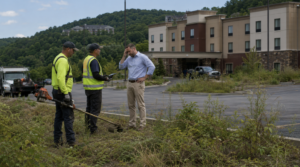
For hotels in West Virginia, the guest experience begins long before someone reaches the front desk. It starts when a traveler pulls into the property, notices the entrance, looks across the grounds, checks the parking areas, and decides within seconds whether the hotel feels clean, safe, professional, and well cared for. In a hospitality market where online reviews, guest photos, local reputation, and repeat bookings matter, overgrown land can quietly damage a hotel’s image before the staff ever has a chance to make a great impression.
This is especially true in Morgantown and the surrounding areas, where hotels often serve a mix of university visitors, business travelers, sports fans, outdoor tourists, families, contractors, and guests passing through northern West Virginia. Morgantown’s position as a major city in north-central West Virginia, along with its connection to West Virginia University, makes it a steady travel destination for people who expect convenient lodging, safe access, and attractive surroundings. For context, Morgantown, West Virginia is widely recognized as an important regional hub, which means hotels in the area compete not only on rooms and rates, but also on presentation, convenience, and trust.
Large hotel properties, extended-stay locations, roadside lodging facilities, resorts, and properties with unused acreage face a unique challenge. Grass, brush, saplings, invasive growth, steep terrain, drainage areas, fence lines, roadside frontage, and wooded edges can quickly become difficult to manage with basic lawn care. That is where professional Large Acreage Vegetation Management Morgantown WV services become a smart business decision for hotels that want to protect curb appeal, safety, accessibility, and long-term property value. 🏨
West Virginia Tourism Makes Hotel Appearance More Important Than Ever
West Virginia’s tourism industry continues to be a major part of the state’s economy, and hotels benefit when travelers view the state as clean, scenic, welcoming, and easy to navigate. The West Virginia Department of Tourism reported that tourism surpassed $9.1 billion in annual economic impact for the first time, with visitor spending reaching a record $6.6 billion. That kind of growth matters for hotels because every guest is choosing between properties, comparing reviews, looking at photos, and deciding where they feel most comfortable staying.
A hotel surrounded by overgrown land sends the wrong message at the worst possible time. Even if the rooms are clean and the staff is excellent, tall weeds, unmanaged fields, encroaching brush, and blocked sightlines can make guests wonder whether the rest of the property is also being neglected. In hospitality, perception becomes reality very quickly. Travelers often judge a property by what they see first, and exterior neglect can lead to lower confidence before check-in ever happens.
Professional vegetation management helps hotels align their exterior appearance with the expectations of modern travelers. Clean acreage, clear access roads, maintained slopes, visible signage, and open sightlines give guests a sense that the hotel is managed with care. That confidence can influence reviews, repeat stays, event bookings, corporate accounts, and the overall reputation of the property.
Overgrown Land Can Hurt Guest Confidence and Online Reviews
Hotels live and die by trust. A guest may forgive small inconveniences when a property feels clean, safe, and professionally maintained, but visible neglect outside the building can create doubt. Overgrown vegetation around parking lots, walking areas, back entrances, drainage ditches, dumpsters, retention ponds, and unused acreage can make a hotel feel less secure. Guests may worry about pests, hidden debris, poor lighting, or whether the property is being properly maintained.
Online reviews often mention more than the room. Guests comment on parking lots, entrances, walkways, exterior lighting, landscaping, and how safe they felt arriving at night. When the outside of a hotel looks neglected, it can become part of the guest’s overall impression. A hotel may invest in updated rooms, lobby improvements, breakfast service, and digital marketing, but overgrown land can still create a negative first impression that affects reviews and bookings.
The West Virginia Hospitality and Travel Association describes hotels and lodging facilities as foundational to the state’s tourism economy, supporting guest experiences and profitability across the hospitality industry. The West Virginia Hospitality and Travel Association also emphasizes advocacy, education, and collaboration for hotels, restaurants, attractions, and tourism businesses. For hotel owners and managers, that bigger picture matters because every property contributes to how visitors experience the state.
Large acreage vegetation management gives hotel operators a practical way to protect that experience. Instead of reacting only when land becomes visibly out of control, a professional plan keeps growth under control throughout the season. That means fewer sudden problems, fewer guest complaints, and a more consistent appearance across the entire property.
Safety, Visibility, and Access Are Business Issues
Vegetation management is not only about appearance. For hotels, overgrown land can create practical safety and access concerns that affect guests, employees, vendors, emergency responders, and maintenance crews. Tall grass and brush can reduce visibility around driveways, road entrances, sidewalks, parking areas, service roads, and signage. When guests are arriving late at night, pulling trailers, traveling with children, or navigating an unfamiliar property, visibility matters.
Hotels in hilly or wooded parts of West Virginia may also deal with slopes, drainage areas, uneven ground, and wooded borders. When those areas are not maintained, small issues can become larger problems. Brush can block access to utility areas. Tree growth can interfere with fences or signage. Thick vegetation can hide trash, fallen limbs, holes, or erosion concerns. Drainage areas can become harder to inspect. In some cases, overgrowth may even make routine maintenance more difficult and more expensive.
The state promotes a wide range of lodging options through its official West Virginia places to stay resources, from hotels and motels to resorts, cabins, bed-and-breakfasts, and unique lodging experiences. That variety is good for tourism, but it also means hotels must stay competitive. A property that looks clean, open, and easy to access has an advantage over one that appears forgotten around the edges.
For hotel managers, the issue is simple. Guests do not separate the building from the land around it. The property is the experience. Parking areas, entrances, lawns, fields, hillsides, and roadside frontage all play a role in whether the hotel feels professional and safe.
Morgantown Hotels Compete in a Strong Hospitality Market
Morgantown has seen meaningful hotel and downtown investment, showing how important lodging is to the area’s growth and identity. The governor’s office previously announced the grand reopening of Hotel Morgan after more than $15 million in investment, describing it as a historic lodging property reimagined for visitors. That kind of Hotel Morgan reopening news highlights the value placed on hospitality, redevelopment, and guest-ready properties in Morgantown.
The City of Morgantown has also reported significant downtown investment, including building improvements and hotel-related revitalization. In its report on downtown Morgantown investment, the city noted millions of dollars in improvements tied to major projects, including Hotel Morgan and High Street Commons. For hotels outside the downtown core, this kind of development raises the standard. Guests see revitalized properties, updated public spaces, and cleaner commercial areas, then expect the same level of care wherever they stay.
Large acreage hotels, highway-adjacent properties, and facilities near commercial corridors cannot afford to let the exterior fall behind. When competitors are investing in renovations, signage, amenities, and guest experience, unmanaged acreage becomes a visible weakness. It can make a property look older, less active, or less professionally run, even if the rooms and service are strong.
A professional vegetation management company helps hotels keep pace with that competitive environment. By clearing unwanted growth, maintaining open areas, managing brush, and improving property visibility, hotels can create an exterior that supports the rest of their brand.
Overgrown Acreage Can Attract Problems Hotels Do Not Need
Hotels already manage enough daily challenges, including staffing, guest service, cleaning schedules, maintenance, vendor coordination, inspections, and seasonal demand. Overgrown acreage adds another layer of problems that can often be prevented with the right plan.
Tall grass and brush can create habitat for insects, rodents, snakes, and other pests that guests do not want to encounter. Thick vegetation near dumpsters, storage areas, retention ponds, and wooded property lines can make pest control more difficult. Overgrowth can also collect litter and make the property harder to clean. When trash is hidden in brush or tall grass, it can sit longer, attract more pests, and create an even worse appearance.
Unmanaged vegetation can also affect the usefulness of the property. Hotels with large open areas may have land that could be used for future expansion, overflow parking, event space, walking areas, pet relief zones, or improved landscaping. When acreage is ignored, the land becomes a liability instead of an asset. Professional vegetation management helps turn that land back into usable, controlled, and visually appealing space.
This is not just about cutting grass. Large acreage work may include brush clearing, field mowing, right-of-way maintenance, fence line clearing, slope management, small tree and sapling control, access path clearing, and seasonal maintenance planning. For hotels, that kind of service can make the difference between constantly reacting to problems and having a property that stays presentable.
Vegetation Management Supports Branding and Guest Experience
Hospitality is built on details. A clean lobby matters. A comfortable bed matters. A friendly front desk matters. The same is true for a well-maintained exterior. When a hotel’s land is clean and controlled, it reinforces the brand promise that guests are in good hands.
West Virginia Public Broadcasting covered the reopening of the historic Hotel Morgan, noting that the property reopened under new ownership after millions of dollars in renovations and that the hotel had long been part of Morgantown history. That West Virginia Public Broadcasting hotel coverage shows how hotel properties can become part of a community’s identity. While not every hotel is historic, every hotel has a public-facing role in how visitors view the area.
A hotel with overgrown land can unintentionally communicate neglect. A hotel with well-managed acreage communicates pride, readiness, and professionalism. That visual message supports marketing, photography, signage, guest confidence, and local reputation. It also gives employees a better environment to work in and gives management fewer exterior problems to explain.
For properties that host weddings, conferences, sports teams, construction crews, university families, or long-term guests, exterior appearance can influence whether people return. Large acreage vegetation management helps hotels create a cleaner, safer, and more polished environment across the entire property, not just the main entrance.
Conclusion
Overgrown land is bad for business because it affects how guests feel, how a property is perceived, and how well a hotel protects its reputation. In a competitive West Virginia hospitality market, especially in and around Morgantown, hotels cannot afford to treat large acreage as an afterthought. The land around the building is part of the guest experience, part of the brand, and part of the property’s long-term value.
Professional vegetation management helps hotels improve curb appeal, maintain safer access, reduce pest-friendly conditions, protect visibility, and present a cleaner image to travelers. It also helps hotel owners and managers stay ahead of seasonal growth instead of waiting until the property looks neglected.
For West Virginia hotels, especially those with large lots, wooded edges, fields, slopes, or roadside frontage, the message is clear. A well-maintained exterior builds trust before check-in, supports better guest impressions, and helps the property compete in a growing tourism economy. Overgrown land creates doubt. Managed land creates confidence. That confidence can lead to stronger reviews, better bookings, and a hotel property that looks ready for every guest who arrives.