
A travel trailer is more than something you tow behind your vehicle. It is your mobile cabin, your weekend getaway, your road-trip headquarters, and sometimes the difference between an ordinary vacation and a memory your family talks about for years. But every mile on the road leaves a mark. Dust, bugs, tree sap, rain streaks, campground grime, road salt, pollen, and sun exposure can all make a beautiful camper look tired long before its time.
That is why regular washing matters. A clean camper is not just about appearance. It protects the finish, helps prevent long-term damage, makes inspections easier, and keeps your trailer looking ready for the next adventure. In a travel world where road trips, RV camping, and flexible vacation planning continue to be part of the larger tourism conversation covered by outlets like Associated Press travel and tourism news, taking care of your camper is part of taking care of the travel lifestyle itself.
This guide walks through how to wash your travel trailer the right way, how often to clean it, what areas need extra attention, and how to keep your camper road-ready and vacation-worthy all season long. 🧽
Why Travel Trailer Washing Matters
Travel trailers are exposed to tough conditions. Unlike a vehicle that may spend most of its time in a garage, a camper often sits outside for weeks or months at a time. It gets hit with ultraviolet rays, rain, bird droppings, leaves, sap, mud, insects, and airborne pollutants. When you drive, the trailer also collects road film, brake dust, tar, and debris from highways.
If that buildup stays on the surface too long, it can dull the finish and make cleaning more difficult later. Streaks can become stubborn. Bugs can bake into the front cap. Dirt can settle into seams and trim. Roof grime can wash down the sides and leave dark trails after every rainstorm.
A consistent wash routine helps protect the trailer’s exterior and preserve its value. Clean surfaces are easier to inspect, too. When your trailer is washed, it is easier to notice cracked sealant, loose trim, damaged decals, soft spots, rust, or early signs of water intrusion. That matters because small repairs caught early are usually less expensive than major repairs discovered too late.
Clean campers also create a better travel experience. When you pull into a campground, national park, or RV resort with a trailer that looks cared for, it simply feels better. It makes setup more enjoyable, photos look nicer, and the whole trip feel more organized from the start.
How Often Should You Wash a Travel Trailer?
How often you wash your travel trailer depends on how often you travel, where you store it, and what kind of conditions it faces. A trailer that is used every weekend during summer will need more frequent cleaning than one used a few times a year. A camper stored under trees may collect sap, leaves, and bird droppings faster than one stored under a covered structure. A trailer used near the coast may need extra attention because salty air can be hard on exterior surfaces and metal components.
As a general rule, it is smart to wash your camper before the travel season begins, after long road trips, after exposure to mud or salt, and before storing it for an extended period. If the trailer sits outside, a monthly rinse or light cleaning during peak pollen or storm season can help keep buildup from becoming a bigger problem.
Travel habits are always changing, and resources like U.S. Travel Association News & Commentary show how important road travel, leisure travel, and domestic tourism remain to the broader travel industry. For trailer owners, that means maintenance is part of being ready when the next trip opportunity comes along.
Start With the Right Cleaning Supplies
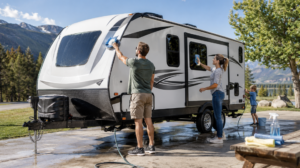
Before washing your camper, gather supplies that are safe for travel trailer surfaces. You will want a gentle cleaner made for RVs or trailers, a soft wash mitt or soft-bristle brush, microfiber towels, a hose with a spray nozzle, and a sturdy ladder or extension pole if needed. Avoid harsh household detergents, abrasive scrub pads, or cleaners that are not designed for painted, fiberglass, gel coat, vinyl, or aluminum surfaces.
This is also where choosing the right product makes a difference. A high-quality Trailer Wash can help remove road grime, bugs, dirt, and oxidation-related buildup while being designed for trailer and RV surfaces. Using a product made for this kind of cleaning is better than guessing with whatever soap happens to be in the garage.
Work in the shade whenever possible. Direct sunlight can cause soap to dry too quickly, leaving streaks or spots. If the trailer is hot from sitting in the sun, give it time to cool before washing. Start with a thorough rinse to loosen dirt and reduce the chance of scratching the surface when you begin scrubbing.
Clean From the Top Down
The best way to wash a travel trailer is from the top down. The roof is usually the dirtiest part of the camper because it catches everything first. Dust, leaves, pollen, branches, bird droppings, and standing water can all collect there. When it rains, that grime flows down the sides and creates streaks.
If it is safe to access your roof, rinse it first and clean it according to the roof material and manufacturer recommendations. Some trailer roofs are rubber, some are fiberglass, and others may have specialty coatings. Do not use products that could damage the roof membrane or seals. Be careful around vents, skylights, antennas, solar panels, and air conditioning units.
After the roof, wash the front cap. This area takes the biggest hit from bugs, road debris, and wind-driven grime. Let the cleaner dwell for a short time if needed, but do not let it dry. Use a soft mitt or brush and rinse thoroughly. Then move to the sidewalls, rear panel, windows, storage doors, steps, wheels, and lower trim.
Cleaning in sections helps prevent soap from drying before you rinse. A good pattern is to wash one side at a time, working from high areas down to lower areas. This keeps dirty water from running over areas you have already cleaned.
Pay Attention to Seams, Trim, and Decals
Travel trailers have many seams, seals, edges, and trim pieces. These areas collect grime easily and are also important for keeping water out. While washing, look closely around windows, doors, roof edges, marker lights, slide-outs, vents, storage compartments, and corner trim.
Do not blast seals with a high-pressure washer. Too much pressure can force water behind trim or into areas that are supposed to stay sealed. A regular hose, gentle spray, and soft brush are usually safer. If you do use a pressure washer, keep the pressure low, use a wide spray pattern, and avoid spraying directly into seams, vents, decals, or weather stripping.
Decals need gentle care. Scrubbing too aggressively can lift edges or fade already aging graphics. Use mild products, soft tools, and plenty of water. If decals are cracked or peeling, washing gives you a chance to spot the problem before it gets worse.
This kind of attention to detail is similar to how experienced travelers follow broader travel updates from trusted sources like Reuters before making plans. A little information ahead of time helps prevent bigger problems later.
Do Not Forget the Awning
The awning is one of the most overlooked parts of a travel trailer wash. It provides shade, comfort, and extra outdoor living space, but it also collects dirt, mildew, tree debris, and moisture. If it is rolled up dirty or damp, odors and stains can develop.
Extend the awning fully and rinse both sides if possible. Use a cleaner appropriate for awning fabric and gently scrub stained areas. Let the awning dry completely before retracting it. This step is especially important before storing the trailer.
A clean awning makes camping feel fresher right away. When you arrive at a campsite and roll out a bright, clean awning, your outdoor space feels more inviting. Add a couple of chairs, a clean mat, and a small table, and your camper starts feeling like a vacation home on wheels. 🌲
Wash the Wheels, Tires, and Undercarriage Areas
While the exterior walls get most of the attention, the wheels and lower areas of the trailer deal with some of the harshest grime. Road film, mud, salt, grease, and brake dust can all collect near the wheels and undercarriage. Keeping these areas clean helps your trailer look better and makes it easier to inspect tires, lug nuts, suspension parts, steps, stabilizers, and frame sections.
Use a separate brush or mitt for wheels and lower areas so you do not transfer gritty debris to the painted or fiberglass surfaces. Rinse thoroughly around the wheel wells and lower trim. If you have traveled through salted winter roads, beach areas, or muddy campgrounds, clean the undercarriage and lower frame areas as soon as practical.
Tires should also be checked while cleaning. Look for cracks, bulges, uneven wear, low tread, and proper inflation. Travel trailer tires age even when the trailer is not used often, so washing time is a good reminder to inspect them closely before the next trip.
Drying Helps Prevent Spots and Streaks
After rinsing, drying the trailer can make a big difference in the final appearance. Letting water air-dry may leave mineral spots, especially if you have hard water. Use clean microfiber towels, a soft drying towel, or a water blade made for vehicle surfaces. Work gently and avoid dragging dirt across the finish.
Dry around windows, trim, mirrors, handles, and storage compartments where water tends to hide. Open storage doors carefully and wipe around the edges. This helps prevent drips from running down the side later.
For campers with glossy finishes, drying also gives you a better look at the condition of the surface. You may notice dull areas, oxidation, fading, or spots that need extra care. If the finish looks chalky or faded, it may be time to consider additional restoration or protective products beyond a basic wash.
Protect the Finish After Washing
Once the trailer is clean and dry, consider adding protection. Depending on the surface, this may include wax, sealant, polish, or a finish-restoration system. Protection helps repel dirt, reduce streaking, improve shine, and make the next wash easier.
Travel trailers sit in the sun for long periods, so UV protection is important. Over time, sun exposure can fade decals, dull fiberglass, and dry out certain exterior materials. A clean, protected trailer not only looks better but may hold its value better, too.
Travelers who follow resources like National Geographic Travel often dream about beautiful destinations, scenic routes, and unforgettable places. But the journey is more enjoyable when your camper is ready for the road before you ever leave the driveway. Exterior protection is one of those quiet maintenance steps that pays off later.
Make Cleaning Part of Your Travel Routine
The easiest way to keep a camper clean is to make washing part of your travel routine instead of waiting until the trailer looks terrible. A quick rinse after a long drive can remove bugs and road grime before they harden. Wiping down the front cap soon after arriving home can save a lot of scrubbing later. Cleaning before storage helps prevent stains from sitting for months.
It helps to keep a small cleaning kit in the trailer. Include microfiber towels, a gentle cleaner, a collapsible bucket, a soft brush, gloves, and a few trash bags. That way, if you pick up bugs, mud, or tree sap during a trip, you can handle small messes before they become permanent stains.
This kind of preparedness fits the modern travel mindset. With travel trends, tourism updates, and destination coverage constantly appearing through sources like Travel Weekly and Skift, travelers are planning smarter and expecting more from every trip. A clean, well-maintained trailer supports that same mindset by helping you travel with confidence.
Storage Tips for a Cleaner Camper
Where and how you store your travel trailer affects how often it needs washing. Covered storage is ideal because it protects the camper from sun, rain, leaves, bird droppings, and airborne debris. If covered storage is not available, try to park away from trees that drop sap, berries, branches, or heavy pollen.
A breathable RV cover can help, but it must fit properly and be used correctly. A poor-fitting cover can rub against the finish in windy weather. Trapped moisture can also create problems. Before covering your camper, wash and dry it thoroughly. Never cover a dirty trailer for long-term storage because dirt can grind into the surface.
During storage, check the trailer periodically. Remove leaves from the roof, inspect for pests, look for water pooling, and keep an eye on seals. A few minutes of attention during the off-season can make spring cleaning much easier.
Why a Clean Trailer Improves the Whole Vacation
A clean travel trailer changes the way a trip feels. When your camper is washed, stocked, inspected, and ready, leaving home is less stressful. You are not rushing to scrub bugs off the front cap, wondering if the roof is dirty, or noticing black streaks as you pull into the campground.
Cleanliness also supports safety. Washing gives you a reason to inspect lights, tires, windows, compartments, hitch areas, roof seals, and exterior hardware. It turns simple cleaning into preventive maintenance.
Travel itself is about movement, discovery, and experience. As Wikipedia’s tourism overview explains, tourism includes travel for leisure, business, and other purposes away from someone’s usual environment. For travel trailer owners, the camper becomes part of that experience. It is not just transportation or lodging. It is the base camp for the memories you are creating.
Conclusion: Keep Your Camper Ready for the Next Adventure
A travel trailer does not need to look brand-new forever, but it should look cared for. Regular washing protects the finish, helps prevent long-term damage, improves resale value, and makes every trip feel a little more special. From the roof to the wheels, from the awning to the decals, every part of your camper deserves attention.
The best approach is simple: rinse often, wash with the right products, work from top to bottom, dry carefully, inspect as you clean, and protect the finish when needed. Do that consistently, and your camper will be easier to maintain, better looking at the campground, and more enjoyable every time you hit the road.
Whether you are heading to a quiet lake, a national park, a beach campground, a mountain overlook, or a family-friendly RV resort, your travel trailer should be clean, road-ready, and vacation-worthy. A little care before and after each trip helps keep the adventure rolling. 🌎🚐